
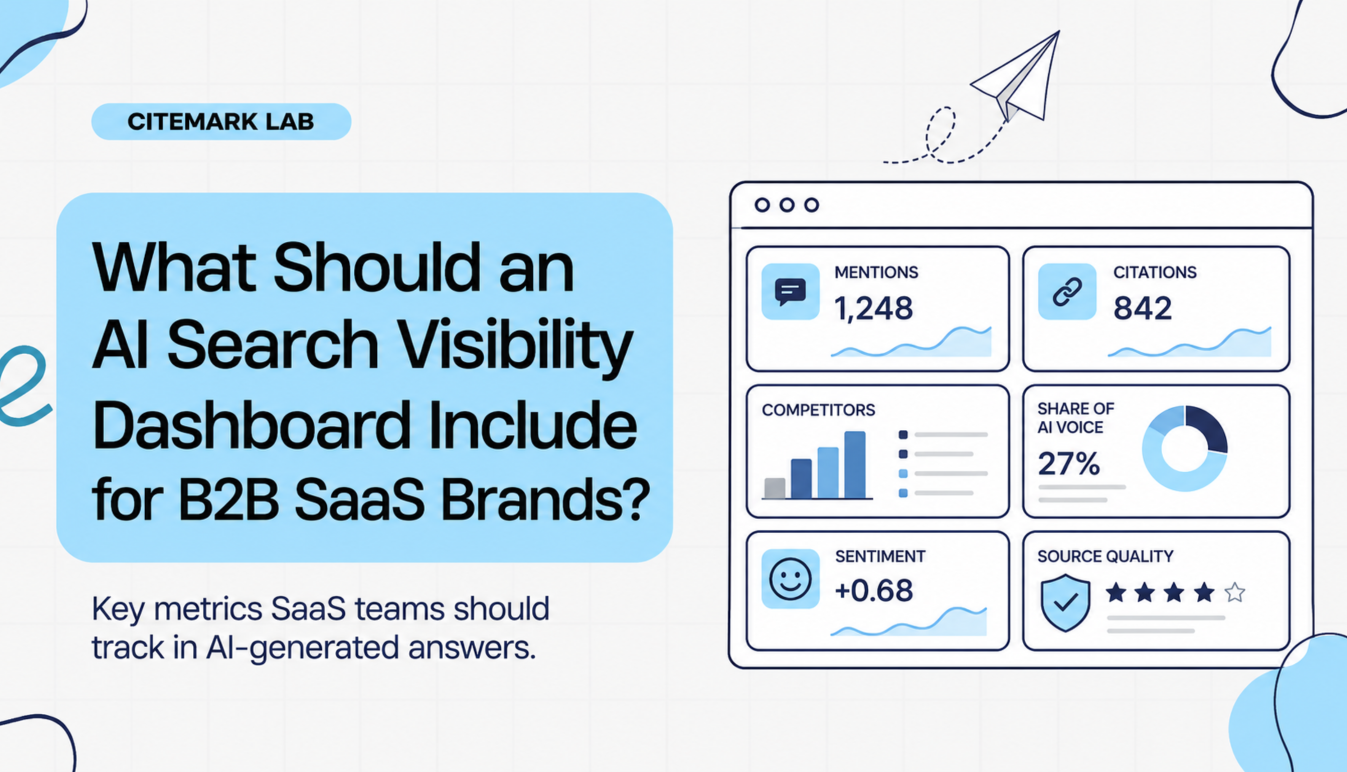
B2B SaaS buyers are using AI tools to research products, compare vendors, summarize categories, and build shortlists.
That means SaaS marketing teams can no longer measure visibility only through traditional SEO dashboards.
Rankings, clicks, and organic traffic still matter. But they do not show whether your brand appears in ChatGPT, Perplexity, Gemini, Google AI Overviews, or other AI-generated answers.
An AI search visibility dashboard helps SaaS teams understand how their brand appears inside AI-assisted discovery.
Why B2B SaaS Brands Need AI Search Visibility Tracking
B2B SaaS buying journeys are often research-heavy.
Before booking a demo, a buyer may ask AI tools questions like:
What are the best tools for customer support automation?
Which CRM is better for small B2B teams?
What are the top alternatives to this software?
How do I choose a product analytics platform?
Which tools are best for tracking AI search visibility?
These questions influence vendor shortlists.
If your brand appears in the answer, you may enter the buyer’s consideration set. If competitors appear and you do not, your brand may be excluded before the buyer reaches your website.
That is why AI search visibility needs to be measured.
AI Search Dashboard vs Traditional SEO Dashboard
A traditional SEO dashboard usually tracks metrics such as:
Keyword rankings
Organic traffic
Impressions
Click-through rate
Backlinks
Indexed pages
Conversions from organic search
These metrics are still useful, but they do not fully capture AI visibility.
An AI search visibility dashboard should answer different questions:
Does AI mention our brand?
Does AI cite our website?
Which competitors appear more often?
Are we recommended for high-intent prompts?
Is our brand described accurately?
Which sources are AI systems using?
Are our pages helping AI generate answers?
In short, SEO dashboards measure search performance. AI search dashboards measure answer visibility.
Key Metrics Every AI Search Visibility Dashboard Should Include
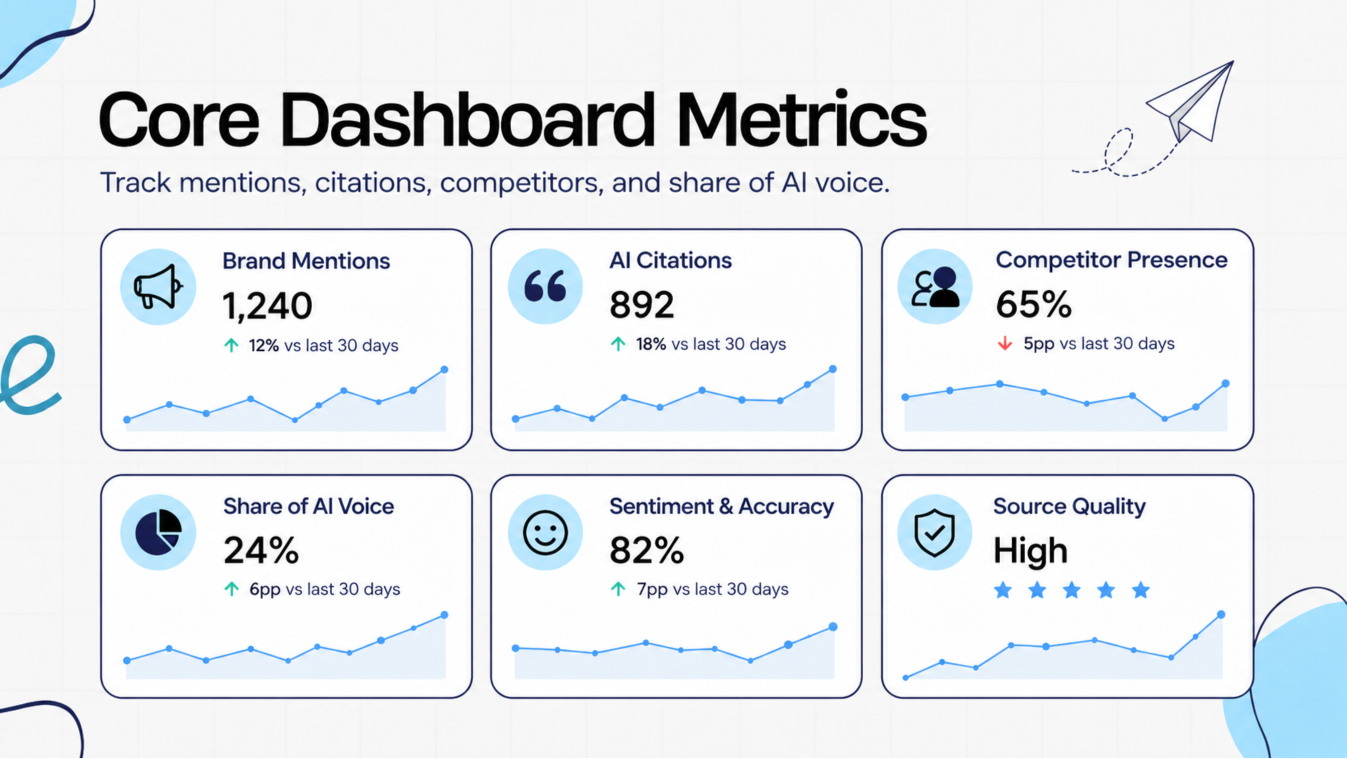
A good dashboard should combine visibility, citation, competitor, sentiment, and source-quality data.
Brand Mentions
Brand mentions show whether AI systems include your company in answers.
For example, if your SaaS brand appears when users ask “best tools for AI search visibility tracking,” that is a brand mention.
Track:
Mention rate across target prompts
Mention rate by platform
Mention rate by query intent
Mention changes over time
Whether mentions appear in high-intent prompts
This helps you understand whether AI systems know when to include your brand.
AI Citations
Citations show whether AI systems use your content as a source.
This is especially important for SaaS brands with strong educational content, documentation, product pages, or case studies.
Track:
Citation frequency
Cited URLs
Cited page types
Citation position
Citation changes over time
Competitor citations
If AI systems cite your blog but not your product pages, that may suggest your educational content is useful but your commercial pages need improvement.
Competitor Presence
AI answers often compare multiple vendors.
Your dashboard should show which competitors appear for the same prompts.
Track:
Competitor mention rate
Competitor citation rate
Prompt clusters where competitors dominate
Questions where your brand is missing
Competitor recommendation position
This helps SaaS teams identify content gaps and positioning gaps.
For example, if competitors appear for “best customer onboarding software for startups” and your brand does not, you may need a stronger use-case page or comparison article.
Share of AI Voice
Share of AI voice measures your brand’s visibility compared with competitors across AI answers.
For example, if your brand appears in 20 out of 100 tested answers and your main competitor appears in 45, your competitor has a stronger share of AI voice.
This metric helps leadership understand AI visibility at a market level.
Track:
Brand share across all prompts
Share by product category
Share by industry segment
Share by platform
Share changes month over month
Share of AI voice is especially useful for competitive SaaS categories.
Sentiment and Answer Accuracy
It is not enough to know whether your brand appears.
You also need to know how AI describes it.
Track whether answers are:
Accurate
Outdated
Positive
Neutral
Negative
Overly vague
Missing key product details
Confusing your brand with competitors
For example, if AI describes your platform as only an SEO tool when you also provide AI visibility analytics, that is a positioning issue.
The dashboard should highlight inaccurate or incomplete descriptions so content and brand teams can fix them.
Source Quality
AI answers may rely on different types of sources.
Some sources are highly useful, such as official documentation, product pages, case studies, research reports, and reputable media. Others may be outdated, thin, or low quality.
Track:
Official website citations
Blog citations
Documentation citations
Review site citations
Media citations
Forum or community mentions
Low-quality or outdated sources
This helps teams understand which sources influence AI answers.
If AI systems rely on old third-party pages instead of your current website, you may need to improve your owned content and external brand footprint.
How SaaS Marketing Teams Can Use This Data
An AI search visibility dashboard is not only for reporting. It should guide action.
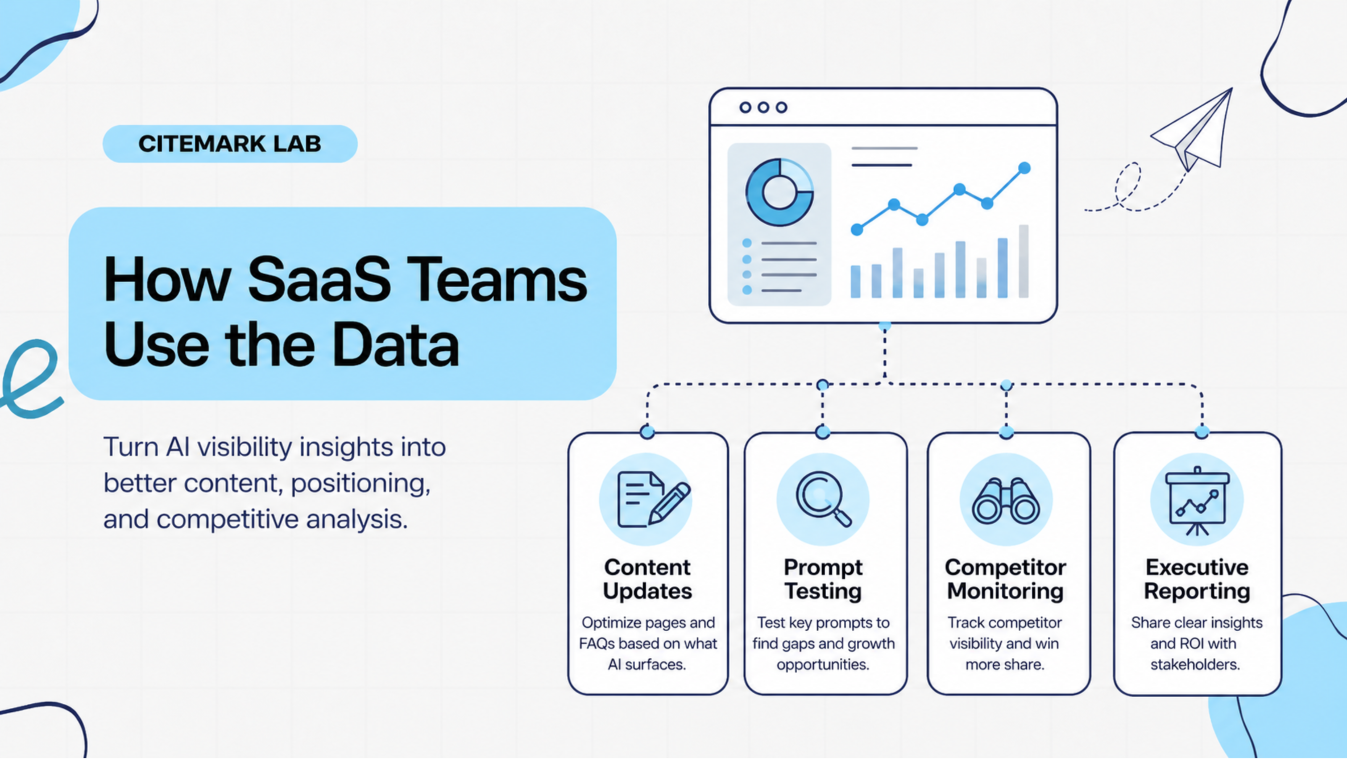
SaaS teams can use the data to:
Find missing prompt opportunities
Improve pages that should be cited
Create comparison content
Update inaccurate positioning
Strengthen product and use-case pages
Monitor competitor visibility
Build third-party trust signals
Prioritize content refreshes
Report AI visibility to leadership
For example, if your dashboard shows low visibility for “best software for enterprise onboarding,” you can create or improve a use-case page, add customer examples, strengthen internal links, and monitor whether AI answers change over time.
Final Thoughts
B2B SaaS brands need a new visibility layer.
Traditional SEO dashboards show how your website performs in search results. AI search visibility dashboards show how your brand appears in generated answers.
A strong dashboard should track brand mentions, citations, competitor presence, share of AI voice, sentiment, answer accuracy, and source quality.
The goal is simple:
Understand whether AI systems can find, understand, cite, and recommend your brand.
For SaaS teams, this is becoming a core part of modern search visibility.
Frequently Asked Questions
What is an AI search visibility dashboard?
An AI search visibility dashboard tracks how a brand appears in AI-generated answers, including mentions, citations, competitors, sentiment, and source quality.
Why do B2B SaaS brands need AI visibility tracking?
B2B SaaS buyers often use AI tools to compare vendors and research solutions. AI visibility tracking helps brands understand whether they appear in those decision-making moments.
What metrics should an AI search visibility dashboard include?
It should include brand mentions, AI citations, competitor presence, share of AI voice, sentiment, answer accuracy, source quality, and prompt-level visibility.