
ChatGPT citation tracking is the process of monitoring whether ChatGPT cites your website, blog posts, product pages, help documents, or other owned content when answering user questions.
For brands, this matters because AI search is becoming part of the customer research journey. Users may ask ChatGPT to compare tools, explain a category, recommend vendors, summarize reviews, or evaluate buying options before they ever visit a website.
If your brand is cited in those answers, your content can influence the decision early. If your competitors are cited and you are not, you may be missing from the AI discovery layer.
What Is ChatGPT Citation Tracking?
ChatGPT citation tracking means checking which sources ChatGPT uses or references when generating answers for specific queries.
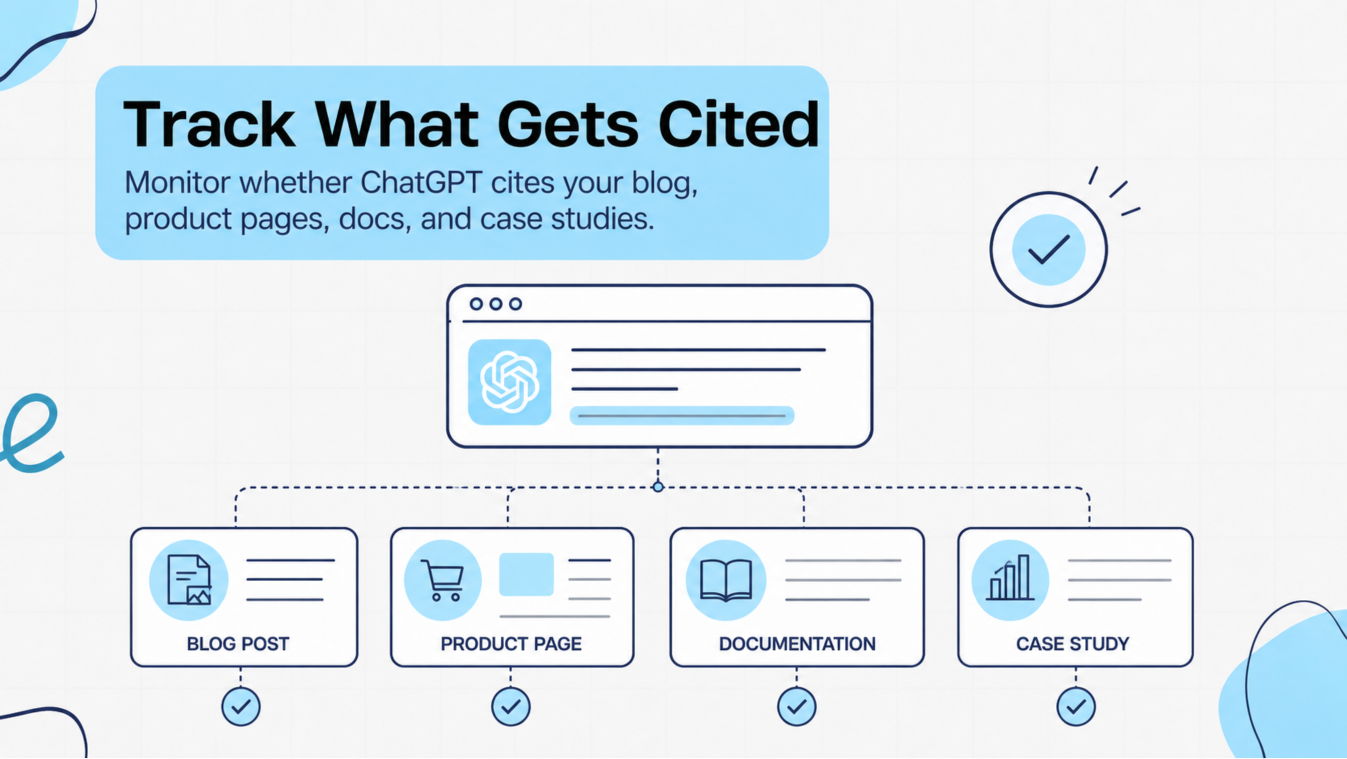
For example, a B2B SaaS company may want to know whether ChatGPT cites its:
Homepage
Product pages
Blog articles
Case studies
Documentation pages
Comparison pages
Help center articles
Research reports
The goal is not only to see whether your brand is mentioned. The goal is to understand whether your website is being used as a trusted source.
A brand mention tells you that ChatGPT knows about your company. A citation tells you that your content may be useful enough to support the answer.
Why Citations Matter in AI Search
In traditional SEO, brands often focus on rankings and clicks. In AI search, the user may receive a summarized answer without opening several search results.
That changes the role of content.
Your page is no longer only competing for a click. It is also competing to become source material for an AI-generated answer.
Citations matter because they can help with:
Brand visibility
Trust building
Category authority
Product education
Competitive positioning
High-intent research queries
Assisted conversions
For example, if a user asks, “What are the best tools for tracking AI search visibility?” and ChatGPT cites your article, your brand may enter the user’s shortlist before the user compares vendors manually.
What Types of Pages Can Be Cited by ChatGPT?
Not every page has the same chance of being cited.
Pages that are clear, structured, specific, and useful are more likely to be selected than generic marketing pages.
Useful page types include:
Educational blog posts
Product explainers
Feature pages
Comparison pages
Alternative pages
Buyer guides
Case studies
Documentation pages
Industry reports
FAQ pages
For example, a page titled “How to Track Brand Mentions in AI Search” is easier for AI systems to use than a vague page titled “Our AI Marketing Solutions.”
Specific pages usually work better because they answer specific questions.
How to Test Whether ChatGPT Cites Your Brand
Start with a small set of prompts that match real customer intent.
You can group prompts into several categories.
Category Questions
These prompts test whether your brand appears for broad industry topics.
Examples:
What is AI search visibility?
What are the best tools for AI search visibility tracking?
How can brands monitor their visibility in AI-generated answers?
Brand Comparison Questions
These prompts test whether your brand appears when users compare options.
Examples:
What are the best alternatives to traditional SEO tools for AI search visibility?
Which tools help brands track AI citations?
Compare AI brand monitoring tools for B2B companies.
Buying Decision Questions
These prompts test whether your content supports purchase research.
Examples:
What should I look for in an AI search visibility platform?
How do I choose a GEO agency?
What metrics should a brand track in ChatGPT answers?
Problem-Solution Questions
These prompts test whether your brand appears when users describe a pain point.
Examples:
How can I know whether ChatGPT cites my website?
Why does my brand not appear in AI search results?
How can I improve citations in AI-generated answers?
Run these prompts regularly and record whether your brand is mentioned, whether your website is cited, and which competitors appear.
Key Metrics to Monitor
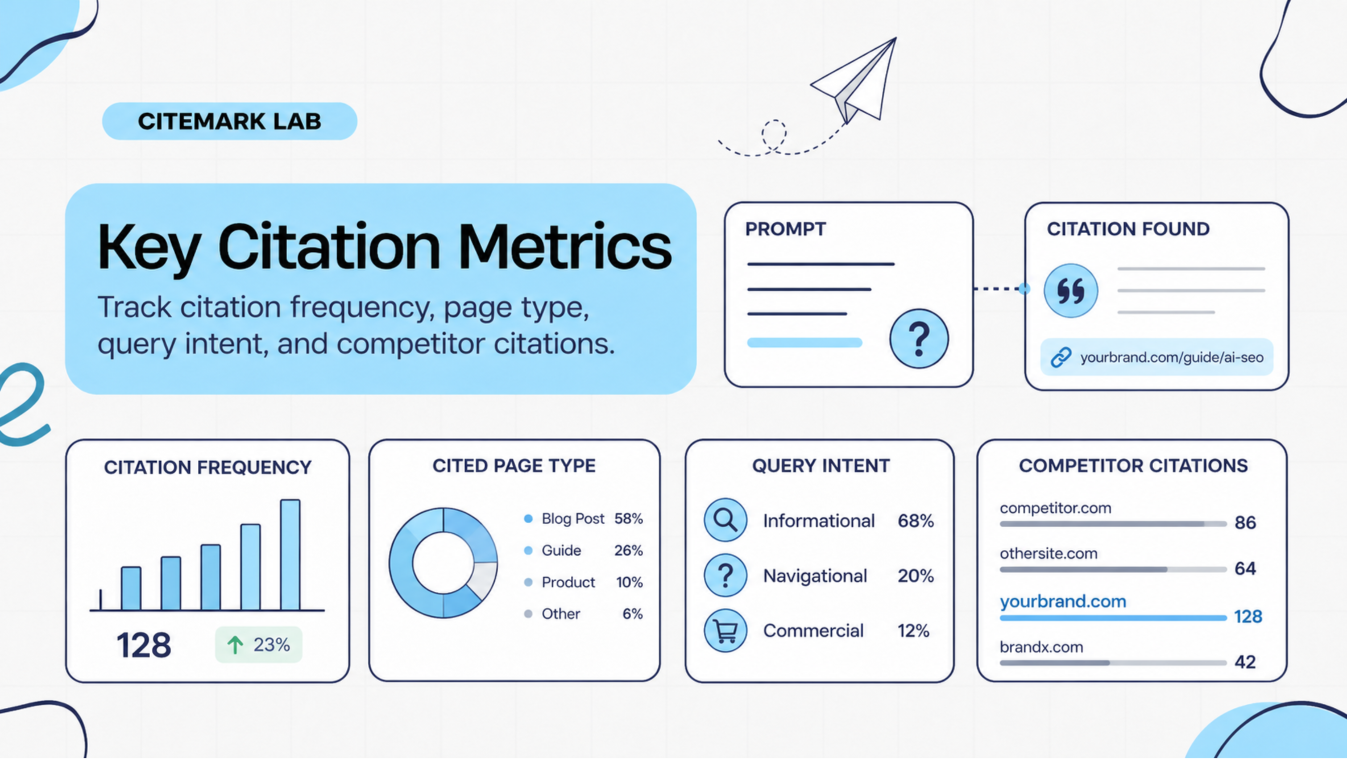
ChatGPT citation tracking should be measured over time. A single test is not enough because AI answers can change by query, platform behavior, source availability, and user context.
Citation Frequency
Citation frequency measures how often your pages are cited across a set of prompts.
For example, if you test 50 prompts and your website is cited in 8 answers, your citation frequency is 16%.
This helps you understand whether your content is becoming part of AI-generated answers.
Citation Position
Citation position looks at where your source appears in the answer.
A source cited near the main answer may have more influence than a source listed at the end. If your competitor is cited first and your brand is cited later, that may suggest weaker authority or relevance.
Cited Page Type
Track which pages get cited.
Are AI systems citing your blog posts, product pages, case studies, or documentation?
This helps you understand which content formats are most useful for AI search.
Query Intent
Not all citations are equally valuable.
A citation for a high-intent prompt such as “best AI search visibility tools for B2B SaaS” is more valuable than a citation for a broad educational query.
Group your prompts by intent so you can see where your content performs best.
Competitor Citations
Track whether competitors are being cited more often than you.
If competitors appear in more AI answers, study which pages are being cited and why. They may have better comparison pages, stronger documentation, more third-party mentions, or clearer positioning.
How to Improve Your Chances of Being Cited
Improving citation visibility is not about tricking ChatGPT. It is about making your content easier to understand, verify, and use.
Start with these steps:
Write direct answers near the top of the page.
Use clear headings and short sections.
Add definitions for important terms.
Include examples and practical details.
Use comparison tables where helpful.
Add FAQ sections for common questions.
Include original data, screenshots, or case examples.
Keep your brand positioning consistent.
Internally link related pages.
Make sure important pages are indexable and easy to crawl.
The goal is to create content that AI systems can confidently use as source material.
Final Thoughts
ChatGPT citation tracking helps brands understand whether their content is being used in AI-generated answers.
This is important because users increasingly rely on AI tools to research categories, compare vendors, and make decisions.
Brands should not only ask, “Are we ranking in Google?”
They should also ask, “Are we being cited in AI answers?”
If the answer is no, the next step is to improve content clarity, source quality, page structure, and topical authority.
In AI search, visibility is not only about being found.
It is about being trusted enough to be referenced.
Frequently Asked Questions
What is ChatGPT citation tracking?
ChatGPT citation tracking is the process of monitoring whether ChatGPT cites your website or content when answering user questions.
Why does ChatGPT citation tracking matter?
It matters because citations can influence how users discover, compare, and trust brands during AI-assisted research.
How can brands improve citation visibility?
Brands can improve citation visibility by publishing clear, structured, evidence-based content that directly answers customer questions and is easy for AI systems to understand.