
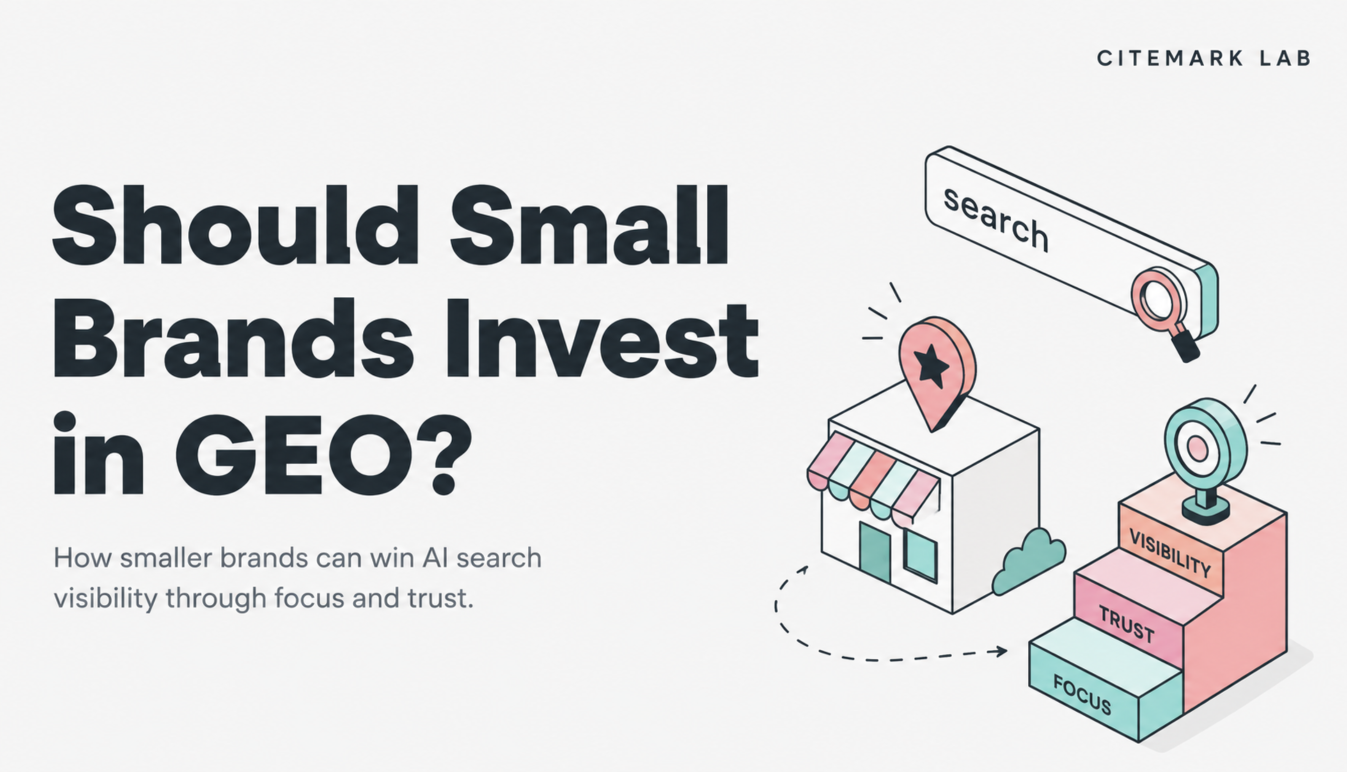
Generative Engine Optimization, or GEO, is often promoted as a new opportunity for small brands to compete with larger companies in AI search.
But the reality is more practical.
GEO is not a shortcut. It will not turn an unknown brand into the top answer in ChatGPT, Google AI Overviews, Perplexity, or Gemini overnight. AI search is selective. It often prefers sources that are clear, credible, well-structured, and supported by signals across the open web.
For small brands, this makes GEO both difficult and valuable.
GEO Is Not an Easy Growth Hack
Traditional SEO gave small brands some space to compete through long-tail keywords, niche blog posts, and lower-competition search terms.
AI search is different.
Instead of showing many blue links, AI systems often produce one summarized answer with only a few cited sources. This means the competition is tighter. If your brand is not included in the answer, the user may never see you.
That is why GEO can feel more difficult than SEO. It is not just about ranking somewhere on a page. It is about being selected as a useful and trustworthy source.
Why Big Brands Have an Advantage
Large brands usually have more public signals.
They may have media coverage, reviews, backlinks, directory profiles, customer discussions, case studies, and years of brand mentions across the web.
These signals help AI systems understand and verify them.
Small brands often lack this wider footprint. Even if their website is well-written, AI systems may still see the brand as less established if there are few external references.
This is why GEO cannot rely only on rewriting a few blog posts or adding schema markup. Those steps help, but they are not enough on their own.
Where Small Brands Still Have a Chance
Small brands can still benefit from GEO if they focus on areas where large brands are slow, vague, or too generic.
The opportunity is not to beat major brands everywhere. The opportunity is to become the clearest answer in a narrow category.
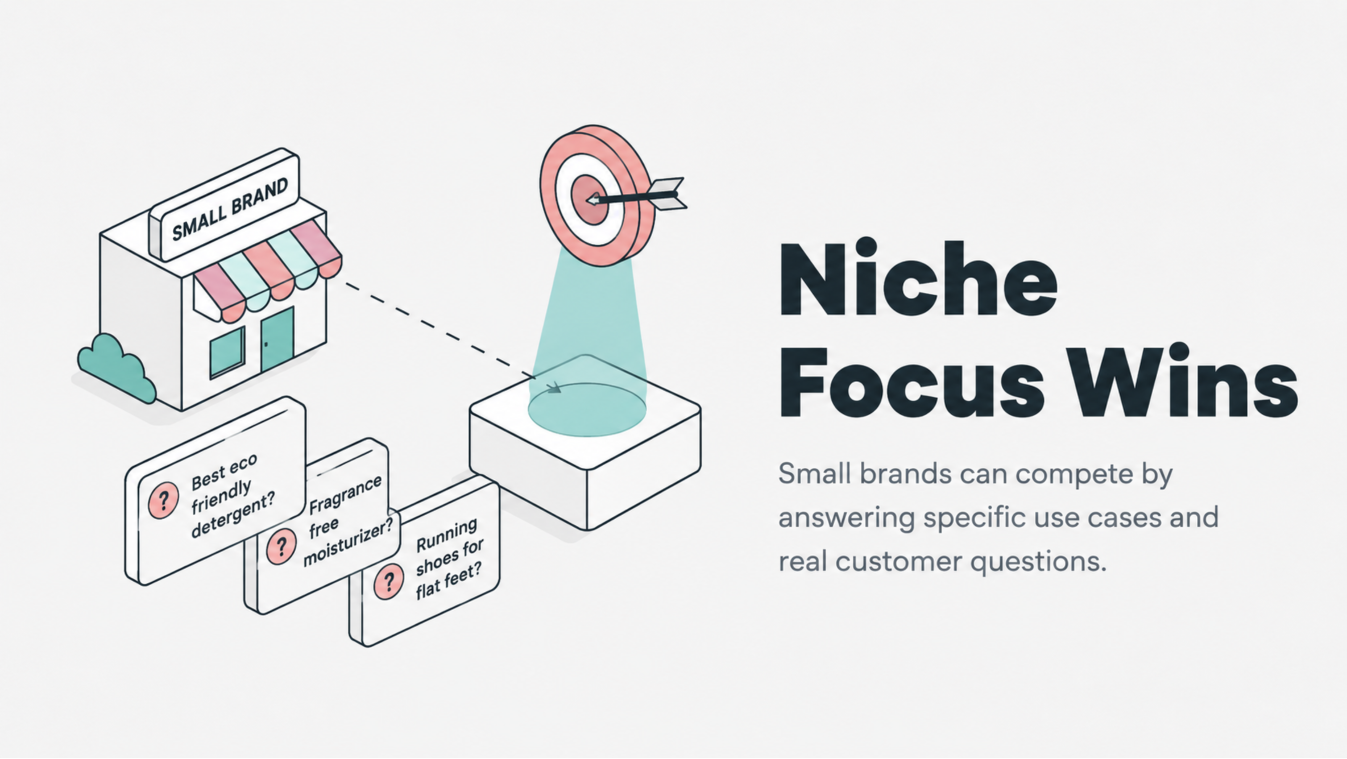
Small brands can move faster by creating content around:
Specific customer problems
Niche use cases
Detailed comparison questions
Practical implementation guides
Real user objections
Product-specific FAQs
Industry terms that larger brands ignore
AI systems need clear and useful information. If a small brand provides the best answer to a very specific question, it has a better chance of being mentioned or cited.
What Small Brands Should Do First
Small brands should treat GEO as a foundation, not a quick traffic trick.
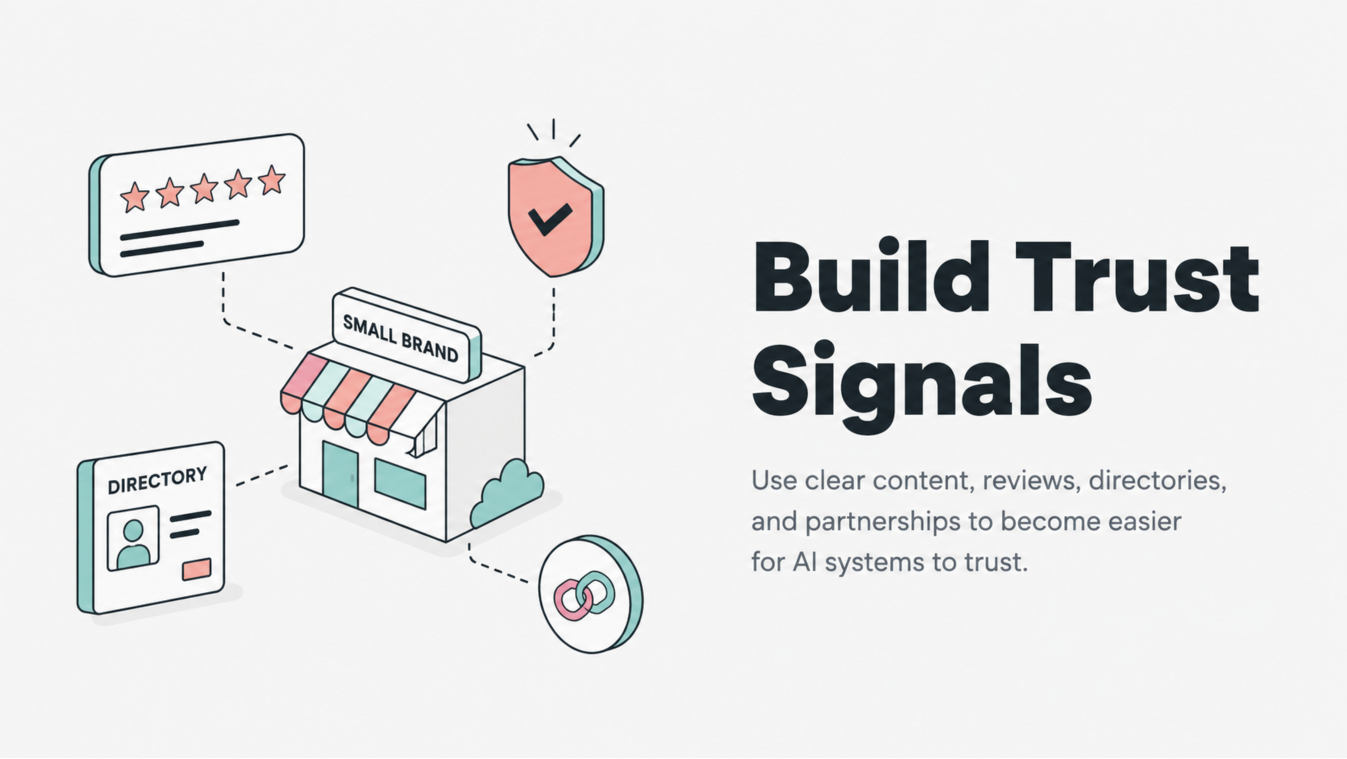
Start with a few practical steps:
Make your website easy to crawl and understand.
Explain clearly who you are, what you do, and who you help.
Build pages around real customer questions.
Add examples, data, screenshots, and practical details.
Keep your brand positioning consistent across your website and external profiles.
Build real third-party signals through reviews, directories, partnerships, and industry mentions.
Track whether your brand appears in AI answers for target prompts.
The goal is not to publish more content. The goal is to become easier for AI systems to understand and trust.
What Small Brands Should Avoid
Small brands should avoid treating GEO as a cheap replacement for real brand building.
Do not expect instant results from generic AI-generated articles. Do not rely on fake reviews, spam mentions, or low-quality forum promotion. Do not assume that technical optimization alone will make AI recommend your brand.
GEO works best when it reflects real expertise, real usefulness, and real market presence.
So, Is GEO Useful for Small Brands?
Yes, but only with the right expectations.
GEO is useful for small brands when it helps them become visible in specific, high-intent AI search scenarios.
It is not useful if the goal is to quickly outrank large brands across broad, competitive topics.
For small brands, the best GEO strategy is focus: choose a narrow category, answer real customer questions better than anyone else, build trust signals over time, and measure whether AI systems start to mention, cite, or describe your brand more accurately.
In AI search, small brands may not win by being louder.
They win by being clearer.
FAQ
Q: Is GEO useful for small brands?
A: Yes, GEO can be useful for small brands, especially in narrow and specific categories. It helps AI systems understand what the brand does, when it should be recommended, and which questions it can answer well.
Q: Can small brands beat big brands in AI search?
A: Small brands usually cannot beat big brands across broad topics. However, they can compete in specific long-tail questions, niche use cases, and detailed customer problems where larger brands have weak or generic content.
Q: What should small brands focus on first?
A: Small brands should focus on clear website structure, answer-first content, real customer questions, practical examples, consistent positioning, and trustworthy third-party signals such as reviews, directories, partner mentions, and industry references.