
Generative Engine Optimization, or GEO, is becoming a serious growth channel for brands that want to be recommended by ChatGPT, Google AI Overviews, Perplexity, Gemini, Microsoft Copilot, and other AI-driven discovery systems.
But global GEO is not the same as simply publishing more blog posts, adding more keywords, or trying to manipulate AI answers with artificial mentions. In international markets, AI visibility is built on a much broader foundation: crawlable web pages, structured brand information, original expertise, third-party trust signals, community discussion, and measurable citation performance.
This guide explains how global GEO actually works and how brands can build a practical, long-term system for being discovered, understood, and cited by AI search engines.
What Makes Global GEO Different?
The biggest difference is the information environment. In many overseas markets, the open web still plays a central role in how information is discovered and verified. Google, Bing, publisher websites, review platforms, forums, YouTube, Reddit, and independent blogs all contribute to the public knowledge layer that AI systems can retrieve from.
That means your website is not just a marketing asset. It becomes one of the primary sources AI systems may use to understand your company, products, categories, comparisons, use cases, and proof points.
For global GEO, the first question is not “How do we create more content?” The better question is: “Can AI systems clearly understand who we are, what we do, why we are credible, and when we should be recommended?”
How AI Search Engines Choose Sources
AI search engines do not cite pages only because they contain exact-match keywords. They tend to prefer sources that are clear, useful, specific, and trustworthy.
A brand page that only repeats generic marketing claims is less useful than a page that provides concrete examples, comparison criteria, original data, screenshots, customer questions, implementation details, or expert commentary.
In practice, AI-friendly sources usually share several traits:
They are crawlable and indexable. If search engines and AI crawlers cannot access the page, the content has little chance of becoming part of an AI answer.
They answer specific questions directly. AI systems often retrieve content to answer long, conversational, high-intent queries.
They provide information gain. The page adds something that is not already repeated across hundreds of other websites.
They show real-world experience. Examples, workflows, screenshots, benchmarks, customer scenarios, and first-hand insights make the content more useful.
They are supported by external signals. Mentions from reputable media, communities, directories, forums, and review sources help reinforce trust.
The Global GEO Framework
A strong GEO strategy should combine technical SEO, content strategy, entity building, third-party validation, and ongoing measurement.
The following framework can be used by B2B SaaS companies, service brands, ecommerce brands, agencies, and international businesses.
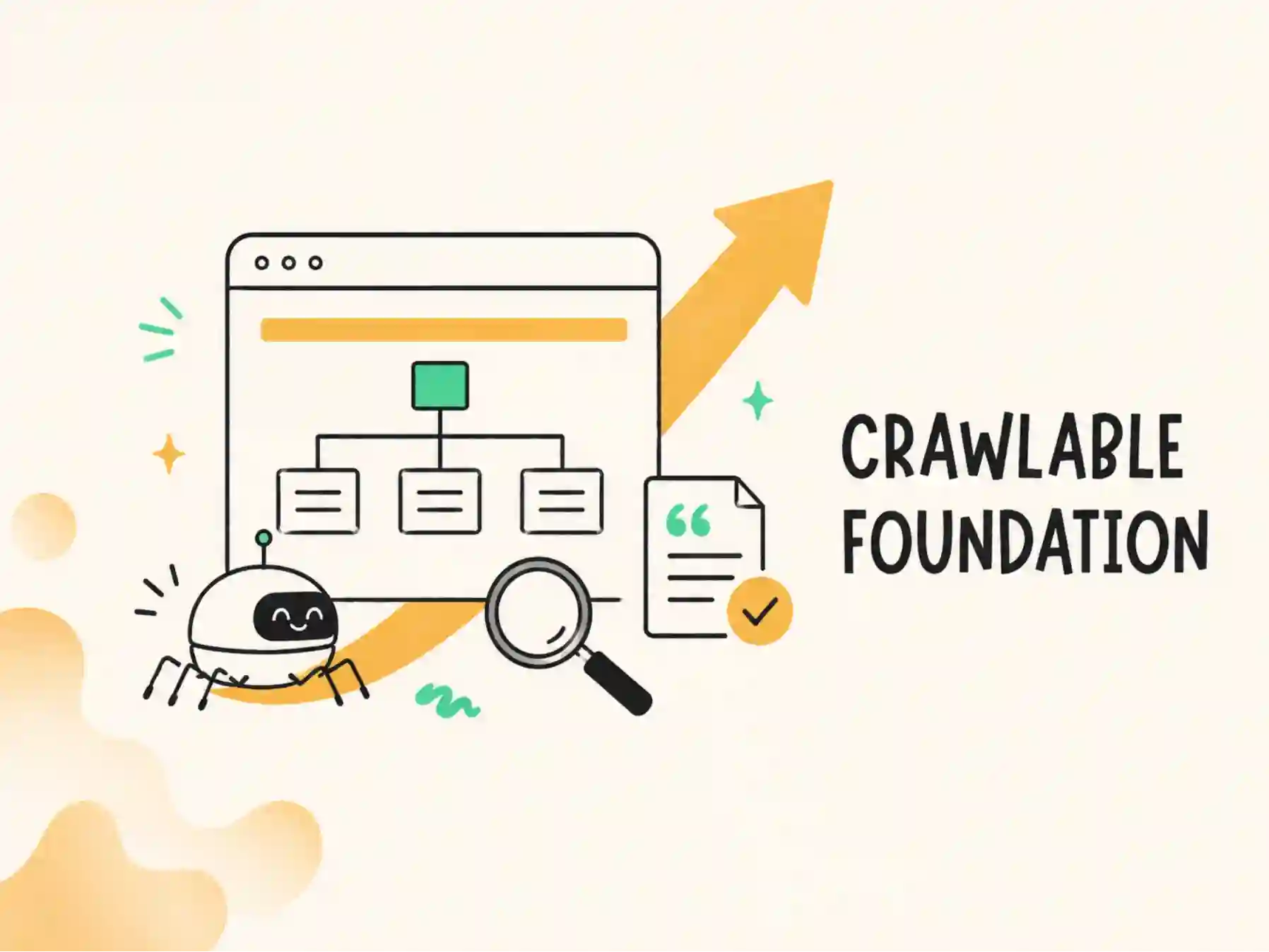
1. Build a Crawlable Technical Foundation
Before creating more content, make sure your website can be properly discovered and interpreted. AI search visibility still depends heavily on the open web and traditional search infrastructure.
Start with the basics:
Make sure important pages are indexable by Google and Bing.
Submit and maintain a clean XML sitemap.
Use canonical URLs to avoid duplicate versions of the same content.
Use clear H1, H2, and H3 heading structures.
Make sure important content is available in server-rendered HTML where possible.
Use internal links to connect service pages, product pages, comparison pages, blog posts, and FAQ pages.
Check robots.txt rules so you do not accidentally block important crawlers.
Use schema markup where it helps clarify organization, article, FAQ, product, service, or review information.
For AI visibility, technical clarity is not optional. If your pages are slow, blocked, duplicated, thin, or hard to parse, AI systems may skip your content even if the writing is good.
2. Create Answer-First Content Assets
Traditional SEO often starts with keywords. GEO should start with questions.
AI search users ask longer, more specific, and more conversational queries. They do not only search for “best CRM software.” They ask questions like “What is the best CRM for a small B2B team that needs outbound sales tracking, HubSpot integration, and simple reporting?”
To capture this kind of demand, build content around real user questions from:
Sales calls
Customer support tickets
Product onboarding conversations
Reddit and forum discussions
Competitor comparison searches
Search Console query data
Internal team knowledge
The best GEO pages are not generic articles. They are answer assets.
Examples include:
Use-case pages
Comparison pages
Alternative pages
Problem-solution guides
Industry-specific FAQ pages
Buyer guides
Implementation guides
Data-backed research pages
Each page should give AI systems a clear reason to cite it.
A useful structure is:
Direct answer
Context
Criteria
Examples
Limitations
Evidence
Next steps
3. Add Real Information Gain
AI systems can already summarize generic information. If your article only says what every other article says, it has little citation value.
To increase information gain, add assets that only your brand can provide:
Original research
Internal benchmark data
Customer implementation examples
Before-and-after workflows
Expert commentary from your team
Product screenshots
Industry-specific templates
Real operational lessons
This is especially important for B2B and professional service brands. AI systems are more likely to reference content that demonstrates practical expertise rather than content that only repeats common definitions.
4. Strengthen Brand Entity Consistency
AI systems need to understand your brand as an entity. That means your name, category, products, positioning, website, social profiles, and third-party references should be consistent across the web.
Check whether your brand information is consistent across:
Your homepage and About page
Organization schema
LinkedIn company profile
Crunchbase or relevant business directories
Google Business Profile or Bing Places, if applicable
Industry directories
Press mentions
Podcast, webinar, or event pages
Inconsistent naming and positioning can confuse AI systems.
For example, if one source describes your company as an SEO agency, another as an analytics platform, and another as a content studio, AI may struggle to identify when your brand should be recommended.
5. Build Third-Party Trust Signals
Your own website is important, but it is not enough. AI systems often cross-check information across multiple sources. Third-party validation helps AI systems understand that your brand is not only self-claiming expertise.
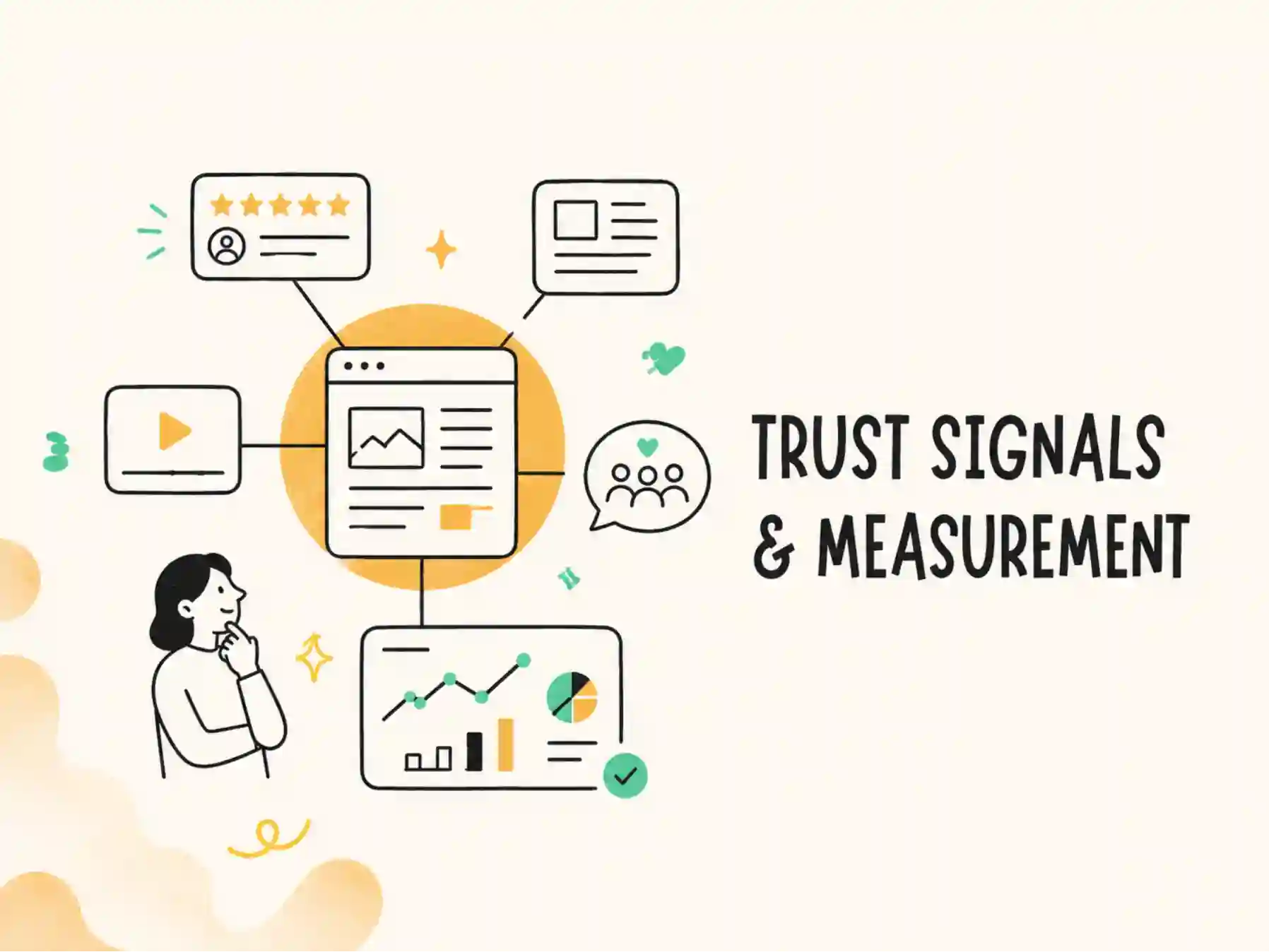
Useful external sources may include:
Industry media coverage
Review platforms
Relevant directories
Partner websites
Podcast interviews
Conference speaker pages
Guest articles on reputable publications
Independent product comparisons
The goal is not to create spammy backlinks. The goal is to build a credible public footprint that confirms who you are, what you do, and why your brand deserves to be included in AI-generated recommendations.
6. Treat Reddit, YouTube, and Forums Carefully
Community platforms matter because they contain natural language, real opinions, product experiences, objections, comparisons, and long-tail questions. AI systems often use this type of content to understand how real users talk about a category.
However, this does not mean brands should flood Reddit or forums with fake posts. That approach is risky and usually short-lived. Communities are sensitive to manipulation, and low-quality promotion can damage both reputation and visibility.
A better approach is to participate with transparency and value:
Answer real questions without forcing a sales pitch.
Publish useful YouTube explainers, tutorials, and product walkthroughs.
Encourage real customers to share honest experiences.
Monitor recurring objections and turn them into better website content.
Use community discussions as research input, not as a place for artificial promotion.
YouTube can also be valuable for GEO because video titles, descriptions, chapters, transcripts, and comments all provide machine-readable context. A strong video strategy can support both traditional search visibility and AI answer inclusion.
7. Measure AI Visibility, Not Just Traffic
GEO performance cannot be evaluated only by organic traffic. AI search often changes the discovery journey. A user may see your brand in an AI answer before visiting your website, comparing vendors, or searching your brand name later.
Track metrics such as:
Brand mention rate in AI answers
Citation rate by platform
Which URLs are cited most often
Which prompts trigger your brand
Competitor comparison visibility
Sentiment and positioning in AI answers
Source types used by AI systems
Search Console and Bing Webmaster Tools performance
Server logs for AI crawler activity
The most useful GEO programs create a feedback loop:
Test prompts.
Identify missing citations.
Improve pages.
Build external proof.
Submit updated URLs.
Measure again.
A 90-Day GEO Action Plan
Days 1–15: Audit and Baseline
Check Google and Bing index coverage.
Review robots.txt, sitemap, canonicals, structured data, and page rendering.
Run AI visibility tests across target prompts.
List competitor brands that appear in AI answers.
Identify which source types AI systems cite in your category.
Days 16–45: Build Core Answer Assets
Create or improve service pages, use-case pages, comparison pages, and FAQ pages.
Add original examples, screenshots, data, and expert explanations.
Strengthen internal linking between commercial and educational pages.
Update organization, article, FAQ, and service schema where relevant.
Days 46–75: Expand Trust Signals
Build third-party mentions through PR, partnerships, directories, and expert content.
Publish useful YouTube content for high-intent questions.
Monitor Reddit and forum discussions for recurring pain points.
Encourage authentic customer reviews and public case studies.
Days 76–90: Measure, Update, and Repeat
Retest the same AI prompts.
Compare mention rate and citation rate against the baseline.
Identify missing source types and content gaps.
Refresh pages that are indexed but not cited.
Turn successful pages into repeatable content templates.
Common GEO Mistakes to Avoid
Treating GEO as keyword stuffing. AI systems need context, evidence, and trust, not just repeated phrases.
Publishing generic AI-generated articles. Commodity content rarely adds enough value to be cited.
Ignoring Bing and other discovery surfaces. AI search is not limited to Google.
Blocking important crawlers accidentally. Review robots.txt and server rules carefully.
Relying only on your own website. Third-party validation is often necessary.
Using fake community promotion. Inauthentic Reddit or forum activity can damage trust.
Measuring only clicks. AI visibility includes mentions, citations, sentiment, and recommendation context.
Conclusion
Global GEO is not a shortcut. It is a system for making your brand understandable, trustworthy, and useful to AI-driven discovery engines.
The brands that win in AI search will not simply be the ones that publish the most content. They will be the ones that build the clearest knowledge assets, the strongest entity signals, the most credible third-party validation, and the most useful answers for real user questions.
In other words, GEO is not just about ranking in AI answers. It is about becoming a source that AI systems can confidently understand, verify, and recommend.
FAQ
Q: What is GEO?
A: GEO stands for Generative Engine Optimization. It is the practice of improving how a brand, website, product, or piece of content appears in AI-generated answers from platforms such as ChatGPT, Google AI Overviews, Perplexity, Gemini, and Microsoft Copilot.
Q: Is GEO different from SEO?
A: Yes, but they overlap. SEO focuses on visibility in traditional search results, while GEO focuses on being mentioned, cited, and recommended inside AI-generated answers. Strong technical SEO, crawlability, helpful content, and trustworthy sources still matter for GEO.
Q: How long does global GEO take to show results?
A: Most brands should treat GEO as a medium- to long-term strategy. Technical fixes and content updates can be completed quickly, but AI visibility usually improves through repeated indexing, third-party validation, prompt testing, and content refinement over several months.
Q: What types of content work best for GEO?
A: The best GEO content answers specific user questions with clear structure, original insight, real examples, evidence, and practical detail. Use-case pages, comparison pages, FAQ pages, implementation guides, buyer guides, and original research pages are often more useful than generic blog posts.
Q: Does Reddit matter for GEO?
A: Reddit and other forums can matter because they contain authentic user discussions, objections, comparisons, and product experiences. However, brands should avoid fake promotion. The better approach is to learn from community conversations and participate transparently when appropriate.
Q: How should brands measure GEO performance?
A: Brands should track AI mention rate, citation rate, cited URLs, prompt-level visibility, competitor presence, sentiment, source types, and changes over time. Traditional analytics should be combined with AI visibility testing and search console data.